Learning to read is a major milestone but understanding what we read is the true goal. For many children, especially in elementary school, reading comprehension can be tricky. They may be able to sound out words or read them aloud fluently, yet when you ask, “So what was that story about?” they struggle to answer.
If you’ve noticed your child can read the words but not always grasp the meaning, you’re not alone. Reading comprehension is a skill that develops gradually and requires practice, guidance, and strategies. The good news? There are many ways parents can support comprehension at home, even in small, everyday moments.
In this guide, we’ll explore why reading comprehension matters, common challenges children face, and practical strategies you can use to help your child build strong comprehension skills.

Why Reading Comprehension Matters
Being able to decode words is important, but comprehension is what allows your child to:
- Learn from what they read (whether it’s a science textbook or a storybook).
- Think critically about characters, events, and ideas.
- Make connections between what they’re reading and their own experiences.
- Enjoy reading as a meaningful, rewarding activity instead of just a task.
Strong comprehension skills set the foundation for success not only in reading but across all school subjects. When kids understand what they read, they become more confident learners.
Why Some Children Struggle with Comprehension
There are many reasons comprehension can be difficult for elementary students. Some common ones include:
- Limited vocabulary: If a child doesn’t know the meaning of certain words, they’ll miss key ideas in the text.
- Difficulty with attention or memory: Some kids can read sentences but forget what they read by the end of the page.
- Decoding challenges: Struggling readers may focus so much on sounding out words that comprehension takes a backseat.
- Lack of background knowledge: Children need context and life experiences to fully understand certain topics in books.
- Rushing through reading: Kids eager to “finish” may skim without pausing to think about meaning.
The good news is that comprehension is highly teachable. With the right strategies and support, children can strengthen their skills step by step.
Practical Reading Comprehension Strategies for Elementary Students
Here are strategies you can use at home to help your child become a stronger, more confident reader.
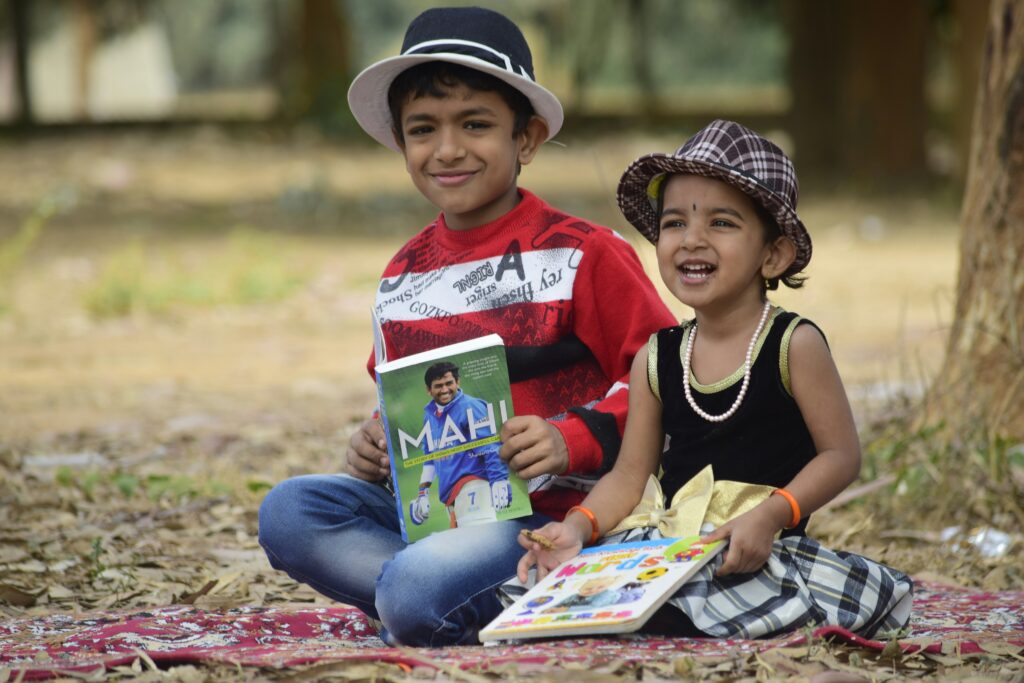
Young boy and girl reading under a tree
1. Preview the Text Together
Before your child begins reading, take a few minutes to preview the book or passage together. Look at the title, pictures, headings, and any bolded words. Ask your child what they think the text might be about.
This simple habit helps activate background knowledge and sets a purpose for reading. It gets your child thinking about the text before they even dive in.
Parent Tip: For nonfiction books, skim the table of contents or glance at charts and diagrams first. For stories, look at the cover illustration and make predictions.
2. Ask Questions Before, During, and After Reading
One of the best ways to boost comprehension is by asking questions. These don’t need to feel like a quiz! Think of it as a conversation about the book.
- Before reading: “What do you think this story will be about?”
- During reading: “Why do you think the character did that?” “What do you think might happen next?”
- After reading: “What was the main problem in the story? How was it solved?”
Questions keep children engaged, help them monitor their own understanding, and teach them to think more deeply about what they read.
3. Teach Retelling and Summarizing
Retelling is one of the clearest ways to check comprehension. After reading, ask your child to tell you the story in their own words. Encourage them to include:
- The characters
- The setting
- The main problem
- How the problem was solved
For nonfiction, ask your child to explain the most important facts they learned.
Parent Tip: Use sentence starters if your child gets stuck:
- “First, the story began with…”
- “Next, the character decided to…”
- “In the end…”
Over time, children learn to summarize without needing prompts.
4. Make Connections
Kids understand better when they connect the text to what they already know. Encourage three types of connections:
- Text-to-self: “This character reminds me of you when you…”
- Text-to-text: “This book is similar to another story we read because…”
- Text-to-world: “This part makes me think about what we saw at the museum.”
Making connections deepens comprehension and helps children see reading as meaningful and relevant to their own lives.
5. Build Vocabulary in Context
Strong vocabulary is essential for comprehension. Instead of drilling word lists, build vocabulary naturally while reading.
When your child encounters an unfamiliar word:
- Pause and reread the sentence it’s in.
- Ask: “What do you think this word might mean?”
- Discuss how the word is used and give examples from real life.
For example, if the story says a character is exhausted, you might say, “Exhausted means really, really tired. Remember how you feel after soccer practice.”
6. Visualize the Story
Encourage your child to create “mental movies” while reading. Ask:
- “What do you picture in your head right now?”
- “Can you describe how the setting looks?”
Visualization helps children engage with the text and remember details better.
Parent Tip: Younger kids may enjoy drawing a quick picture after reading to show what they imagined.
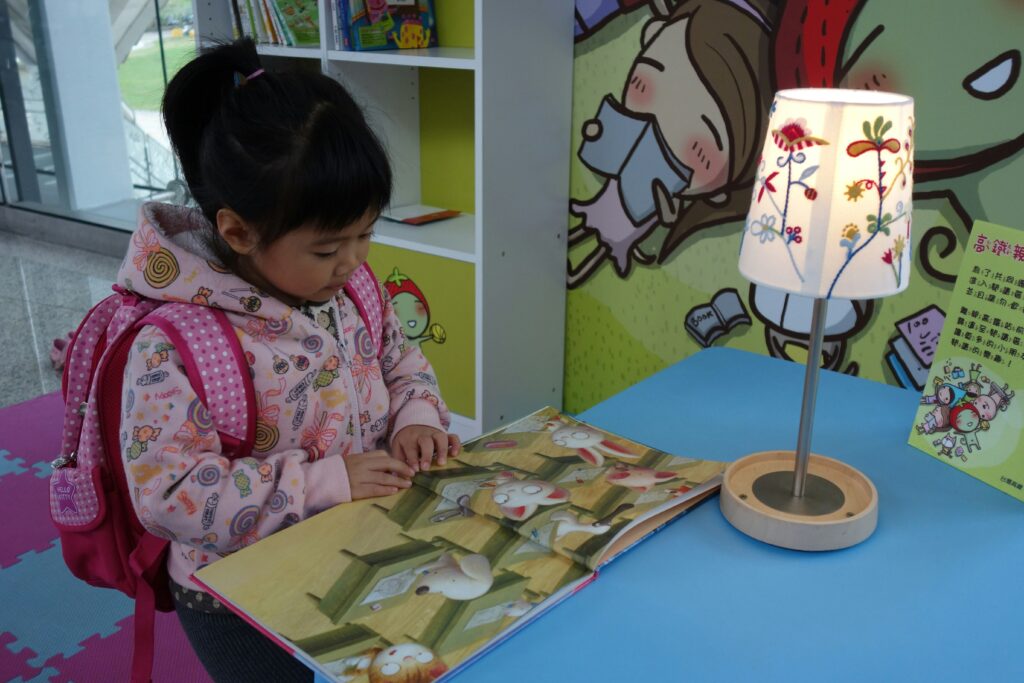
Young girl with backpack reading a picture book at blue table
7. Slow Down and Reread
Some kids race through a book just to say they finished. Remind your child that reading is not about speed but understanding. Encourage them to:
- Pause when something doesn’t make sense.
- Reread confusing sentences or pages.
- Stop and talk through tricky parts together.
Slowing down builds comprehension and helps kids notice important details they might otherwise miss.
8. Use Graphic Organizers
Visual aids can make abstract comprehension skills more concrete. Try using simple organizers like:
- Story maps: Characters, setting, problem, solution.
- Sequencing charts: First, next, then, last.
- Venn diagrams: Comparing two characters, stories, or ideas.
These tools help kids organize information in a way that’s easier to understand and remember.
9. Read Aloud Together
Even after your child can read independently, reading aloud together is powerful. You can model good reading habits such as pausing at commas, using expression, and thinking aloud about the text.
Try this: Stop during reading and share your thoughts:
- “Hmm, I wonder why the character made that choice.”
- “That reminds me of something we learned about.”
Hearing your thought process helps your child develop their own comprehension strategies.
10. Encourage Discussion After Reading
Instead of closing the book and moving on, take a few minutes to chat about what you read. Ask open-ended questions like:
- “What was your favorite part and why?”
- “What surprised you?”
- “What lesson do you think the author wanted us to learn?”
These discussions encourage deeper thinking and help your child see reading as more than just words on a page.
11. Balance Fiction and Nonfiction
Expose your child to a variety of reading materials. Fiction builds imagination and empathy, while nonfiction teaches kids how to gather and understand information.
Parent Tip: Use your child’s interests to guide nonfiction reading. Dinosaur fan? Grab a dino fact book. Animal lover? Check out a nature magazine.
12. Model a Love of Reading
Children who see parents enjoy reading are more likely to value it themselves. Let your child see you reading books, magazines, or articles. Talk about what you’re reading and why you enjoy it.
When kids view reading as a fun, lifelong activity and not just homework, they’re more motivated to engage deeply.

Mom reading a book to their child on the floor
Making Reading Comprehension Fun
Comprehension practice doesn’t have to feel like extra work. Here are a few playful ideas:
- Book Club for Two: Pick a book to read together and discuss each chapter like a mini book club.
- Role Play: Act out scenes from the story to bring it to life.
- Comic Strip Summaries: Have your child draw a short comic strip showing the main events.
- Prediction Jar: Pause while reading and let your child write or draw their prediction, then revisit it later.
When to Seek Extra Support
Some children need more than at-home strategies to build strong comprehension. If your child:
- Struggles consistently across multiple books,
- Can decode words but rarely understands what they’ve read,
- Or feels discouraged and avoids reading altogether,
…it may be time for additional support.
Tutoring can provide targeted instruction and build both skill and confidence. At Reading Nook Tutoring, we start with an assessment to pinpoint your child’s strengths and challenges, then design lessons that focus on strategies like re-reading for fluency, vocabulary building, and guided comprehension practice.

Young girl reading a Dr. Seuss book at a table
Final Thoughts
Reading comprehension is the bridge between sounding out words and truly understanding what they mean. While many children need time and practice, parents play an important role in supporting this growth. By previewing texts, asking questions, making connections, and keeping reading fun, you can help your child become a thoughtful, confident reader.
Remember, every child progresses at their own pace. With patience, encouragement, and the right strategies, comprehension skills will grow and so will your child’s love of reading.
If you’d like more personalized guidance, Reading Nook Tutoring offers free consultations to help families identify their child’s reading needs and create a plan for success. Book your free consultation today and take the first step toward stronger reading skills.
About the Author
Laura Dodge is the founder of Reading Nook Tutoring, where she supports children in kindergarten through grade 6 with personalized, phonics-based reading instruction.
Qualifications: Laura is a certified teacher with the Ontario College of Teachers and is a graduate of the Master of Arts in Child Study and Education program, OISE, University of Toronto. She has a background in literacy education and years of experience helping struggling readers build skills in phonics, fluency, and comprehension. She is passionate about making reading both effective and enjoyable for every child.