

Learning to read is one of the most important milestones in a child’s education, and phonics plays a big role in making it happen. If your child is finding reading difficult, you’re not alone—many children need extra practice before reading “clicks,” and there are lots of ways you can help at home.
What is Phonics?
Phonics is a method of teaching reading by connecting letters (or groups of letters) with the sounds they make. For example, the word ship is made up of three sounds: /sh/ /ĭ/ /p/. By learning these letter–sound relationships, children can “decode” unfamiliar words instead of guessing or memorizing.
Phonics gives children the keys to unlock the written code of English. Once they have these keys, they can start building the confidence and independence they need as readers.

Why English Can Be Tricky: A Deep Orthography
English has what experts call a deep orthography, which means the spelling system isn’t always straightforward. Unlike languages with a shallow orthography (like Spanish or Finnish, where each letter consistently represents one sound), English is full of exceptions and variations.
For example:
- The sound /ē/ can be spelled in many ways: see, sea, scene, ceiling.
- The letter c sounds different in cat and city.
- Some words don’t follow common patterns at all (one, said, was).
This complexity is why phonics instruction is so important and why many children benefit from extra practice. They need time not only to learn the common patterns but also to recognize and remember the exceptions.
Strategies to Help Your Child with Phonics
1. Review and Repeat Often
Children who struggle with reading benefit from steady, repeated practice. It’s tempting to move quickly once your child seems to “get” a sound or pattern, but mastery takes time. For example, if your child learns the short /a/ sound as in cat, keep coming back to it in future weeks even as you introduce new sounds.
At home you can:
- Create a stack of sound or word cards and shuffle them into your reading time daily.
- Ask your child to read words they learned last week before starting something new.
- Keep practice sessions short (5–10 minutes), but consistent.
2. Use Multi-Sensory Learning
Kids learn best when they can engage multiple senses (seeing, hearing, and moving). Multi-sensory phonics activities make learning more fun and strengthen memory pathways in the brain.
Try these ideas at home:
- Have your child trace letters in sand, salt, or shaving cream while saying the sound aloud.
- Use magnetic letters on the fridge to build simple words like cat, map, or sun.
- Clap, tap, or stomp out each sound in a word. For example, say dog and have your child tap once for /d/, once for /o/, and once for /g/.
These hands-on activities make abstract reading skills concrete and memorable.
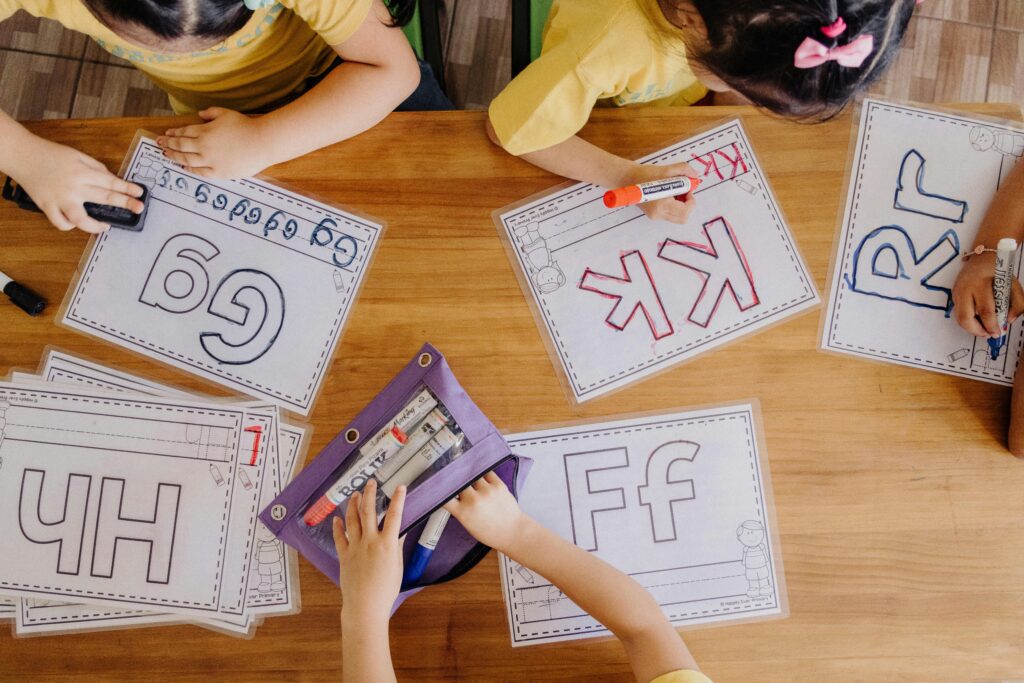
Children colouring letters
3. Point Out Words in Everyday Life
Phonics doesn’t have to stay at the kitchen table because reading opportunities are everywhere. By weaving phonics into daily routines, you show your child that reading is useful, fun, and part of the real world.
Simple ideas include:
- At the grocery store, read package labels together. “This says milk! What sound does it start with?”
- Point out street signs or store names and ask, “Can you find the /s/ sound?”
- At breakfast, read the cereal box and look for familiar letters or patterns.
Over time, your child will start spotting sounds and words on their own, which builds independence and confidence.
4. Keep it Positive and Playful
Learning to read can be frustrating, especially when progress feels slow. The most powerful thing you can do is encourage your child and make phonics feel like a game instead of a chore.
Ways to keep it upbeat:
- Celebrate small wins with high-fives, stickers, or verbal praise. “You remembered the /sh/ sound!”
- Turn practice into a game! Play “I Spy” with beginning sounds (“I spy something that starts with /b/”).
- Read together often, but stop if your child is getting overwhelmed. It’s better to pause and return later than to push through frustration.
Remember: confidence is just as important as skill. When children feel successful, they’re more motivated to keep learning.
5. Practice Word Families
Word families are groups of words that share a common ending, like cat, hat, sat, or ring, sing, king. Practicing these patterns helps children see predictable relationships between letters and sounds, making it easier to decode new words.
At home you can:
- Make a “word family” chart and add new words as your child learns them.
- Play word family matching games, finding rhyming pairs or creating silly words together.
- Encourage your child to read books or poems that feature repeated word families.
6. Use Decodable Books
Decodable books are written specifically for practicing phonics patterns, giving children plenty of opportunities to read words they’ve learned. They build confidence because your child can read independently without guessing.
Tips for using decodable books:
- Start with books that focus on the sounds your child already knows.
- Read aloud together, pointing out the phonics patterns.
- Gradually move to books that introduce new patterns once your child is ready.
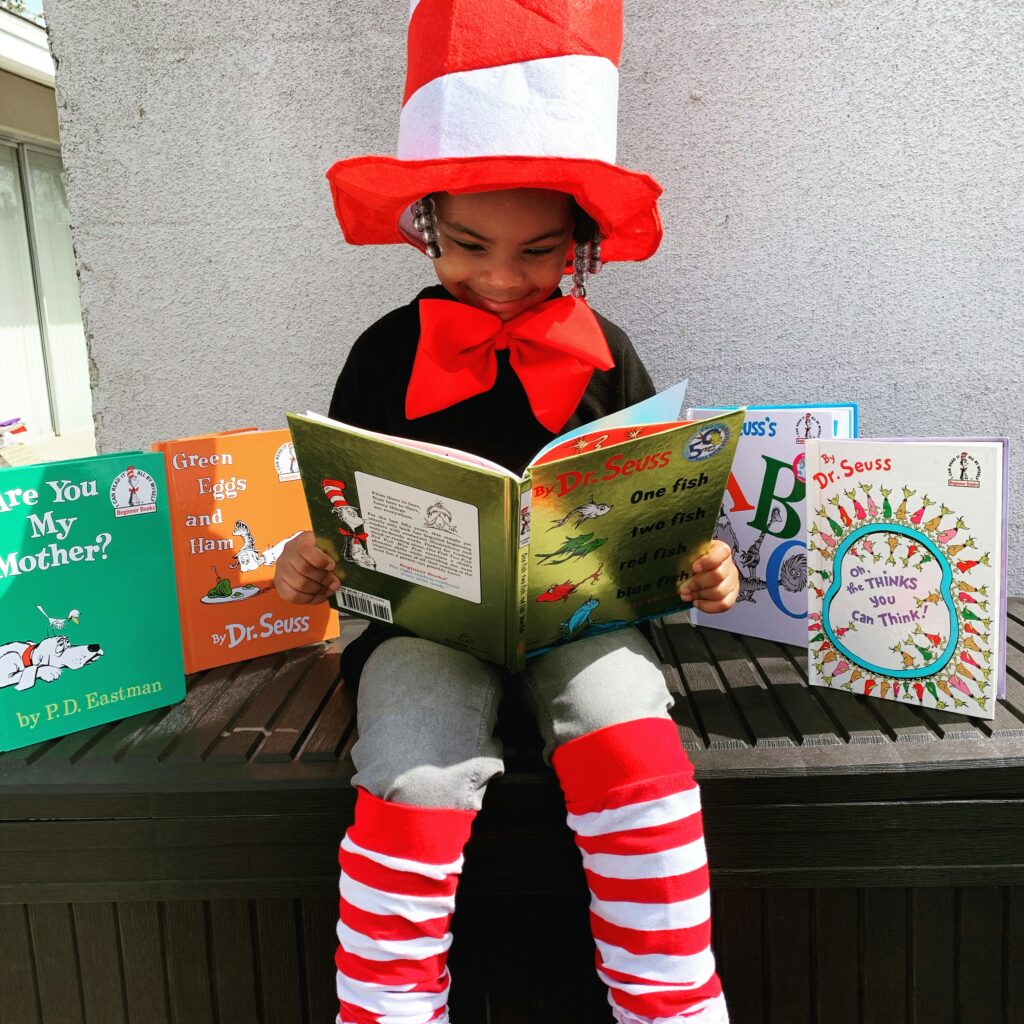
Young girl in a cat in the hat costume reading
Fun Phonics Activities for Home
Making phonics playful helps children engage with reading naturally. Here are some hands-on, interactive activities you can try at home:
1. Sound Hopscotch
Write letters, digraphs (like sh or ch), or simple words in sidewalk squares or on masking tape on the floor. As your child hops on each square, they say the sound or word aloud.
- Variation: Have your child say a word that starts or ends with that sound as they hop.
- Great for: Physical engagement and reinforcing letter-sound correspondence.
2. Silly Word Building
Use magnetic letters, letter tiles, or flashcards to make real words (dog, hat) and silly nonsense words (mig, zat).
- Nonsense words are excellent for pure decoding practice without relying on memory.
- Variation: Challenge your child to read the silly words as fast as they can!
3. Phonics Treasure Hunt
Hide sound cards, letters, or word cards around the house. As your child finds them, they read the letters or words aloud.
- Variation: Give clues that emphasize a specific sound, e.g., “Find something that starts with /b/.”
- Great for: Combining movement with phonics practice, boosting engagement.
4. Story Sound Search
When reading a book together, pick a target sound (like /th/). Every time your child sees or hears it, they clap or point it out.
- Variation: Track sounds in a notebook or chart to show progress over time.
- Great for: Strengthening phoneme awareness and spotting patterns in context.
5. Letter or Sound Art
Combine creativity with phonics by turning letters and sounds into art.
- Examples: Paint a letter while saying its sound, make a collage of words starting with a target letter, or shape letters using playdough.
- Great for: Engaging visual and tactile learners, reinforcing memory through multi-sensory input.
6. Word Family Games
Focus on rhyming word families (-at, -ig, -op) by sorting words into groups, matching cards, or creating new words together.
- Variation: Play “Word Family Bingo” or make up silly poems using a word family.
- Great for: Reinforcing patterns in spelling and decoding skills.
7. Phonics Relay
Set up a mini obstacle course with letter or word cards. As your child moves through the course, they read each card aloud before advancing.
- Variation: Include simple tasks like jumping, hopping, or clapping to keep it active and fun.
- Great for: Combining movement with phonics practice, which is especially helpful for energetic learners.
8. Sound Sorting
Gather objects or pictures from around the house and sort them by their beginning, middle, or ending sounds.
- Example: Sort cat, cup, car under /c/ or dog, dig, duck under /d/.
- Great for: Developing phonemic awareness and practicing segmenting sounds.

Young girl reading a book
Final Thoughts
English may have a deep orthography that makes reading harder to learn, but with consistent phonics practice and fun activities at home, you can help your child become a confident reader. The key is patience, repetition, and keeping reading enjoyable.
Every child learns at their own pace! Some will take off quickly, while others need a little more time and support. With encouragement and the right tools, your child can unlock the code of reading and thrive.
If you’d like extra guidance, Reading Nook Tutoring offers free consultations to help you understand your child’s reading strengths and challenges. During this session, we’ll discuss personalized strategies and how tutoring can support your child’s growth. Book your free consultation today and take the first step toward boosting your child’s reading confidence.
About the Author
Laura Dodge is the founder of Reading Nook Tutoring, where she supports children in kindergarten through grade 6 with personalized, phonics-based reading instruction.
Qualifications: Laura is a certified teacher with the Ontario College of Teachers and is a graduate of the Master of Arts in Child Study and Education program, OISE, University of Toronto. She has a background in literacy education and years of experience helping struggling readers build skills in phonics, fluency, and comprehension. She is passionate about making reading both effective and enjoyable for every child.